Stool's Gold: Why the Bar Counter Is Britain's Smartest Night-Out Seat
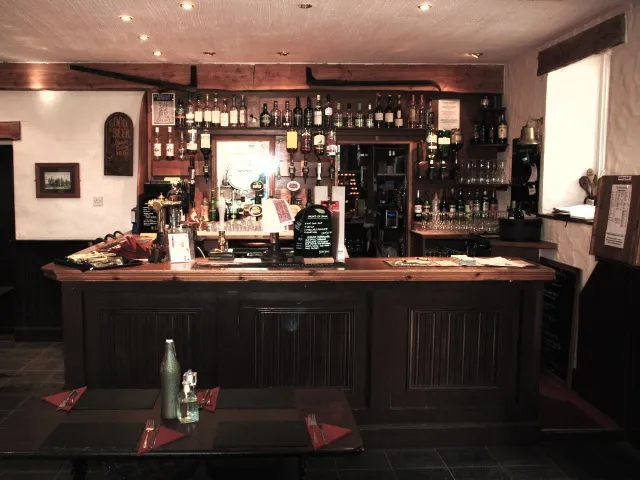
Photo: Patrick Mackie, CC BY-SA 2.0, via Wikimedia Commons
There is a particular kind of British bar night that begins with a small act of optimism: walking in, clocking a free stool at the counter, and claiming it before anyone else does. No table number. No booking deposit. No hovering waiter with a clipboard. Just a piece of wood, a brass rail and a direct line to the person making the drinks.
In 2026, that seat is looking less like a consolation prize for solo drinkers and more like the smartest spot in the room. Bars are smaller, rents are sillier and nights out are more flexible than they used to be. The counter fits all of that. It is walk-in friendly, it works for one person or two, and it puts the theatre of the bar exactly where you want it: in front of you.
The case for the single stool
Solo drinking has always been a bit awkward in Britain, largely because pubs and bars are built around the idea that you are part of a group. A table for one can feel like a confession. A stool at the bar feels like a decision. You are not waiting for someone; you are exactly where you intended to be.
First dates benefit too. Sitting side by side is less confrontational than locking eyes across a candle, and it gives you both something to look at when the conversation needs a breather. You can watch the bartender build a drink, clock the back bar, comment on the playlist. The counter gives you a shared view rather than a staring competition.
Groups can use it as a base camp, too. Two stools become four, then six, as friends drift in. Nobody has to commit to a three-hour table booking. Nobody has to shout across a cavernous dining room. The counter is a loose arrangement, which is often exactly what a modern night out needs.
No reservation, no problem
The no-reservation counter is a very 2026 sort of pleasure. It suits the way people actually go out now: earlier, more spontaneously, often in smaller pockets of time. You might have an hour after work, a gap before dinner or a train to catch. A counter seat lets you have a proper drink and a bit of atmosphere without turning the evening into a logistics operation.
It also puts you in the hands of the bar rather than a booking system. You take your chances, you read the room, you maybe wait ten minutes with a drink by the window. That small uncertainty is not a flaw. It is part of the fun.
Counter etiquette, decoded
The stool comes with an unwritten contract. First, order something. It does not have to be elaborate, but a glass of tap water and a long conversation is not a fair trade for prime counter space. Second, read the room. If the bar is three deep and the bartender is moving like a plate spinner, save the questions about amaro for later.
Third, do not camp. A counter seat is not a rent-controlled flat. If you have finished your drink and people are circling, move on with good grace. Fourth, keep your bag off the floor and your phone off the counter. The bar is a shared stage, not your personal dressing room.
And tip if you have been looked after. Not because you have to, but because the counter is a relationship. The bartender remembers the people who treat the seat like a guest chair rather than a throne.
Pick your seat by mood
Where you sit at the counter changes the night. The end stool is the classic solo pick: a bit of elbow room, a view down the bar and no sense that you are blocking service. The middle stool is for action. You get the full sweep of the room, the fastest access to the bartender and a front-row seat for every drink being made.
A corner stool is the first-date choice. It is slightly tucked away, angled towards each other, and it gives you a natural excuse to lean in. Near the service well is for people who like the engine room, but be warned: it is the noisiest, busiest spot, and not the place for a deep and meaningful chat.
If you are with a group, cluster at the quieter end and let the bar breathe around you. If you are on your own and feeling sociable, sit where the bartender can catch your eye. If you want to be left alone, pick the end nearest the wall and order with a smile that says you are happy in your own company.
Where the counter is having its moment
You can feel this shift across the UK. In London, the small bars of Soho and Hackney are built around the counter, with stools that seem to multiply after 9pm. Manchester's Northern Quarter has turned bar-side drinking into a contact sport. Glasgow, Bristol, Leeds and Brighton all have rooms where the best view is the back bar and the best conversation is with whoever is shaking the cocktail.
These are not necessarily formal cocktail lounges. Some are pubs with a proper bar, some are wine bars with a few stools, some are tiny drinking dens where the counter is the whole point. What they share is a sense that the bar is not just where you order. It is where the night happens.
The front-row seat
Britain has spent years romanticising the table: the booth, the banquette, the corner reserved for a special occasion. All good. But the counter offers something different. It is sociable without being performative, relaxed without being lazy, and it gives you a direct line to the people who know the drinks best.
So next time you walk into a bar and see a free stool, take it. Order something you have not tried before. Ask a question if the bar is calm. Watch the room from the best seat in the house. The counter revolution is not a marketing slogan. It is just a very good place to sit.