Borrowed Hands, Packed Rooms: Inside Britain's Guest Bartender Boom
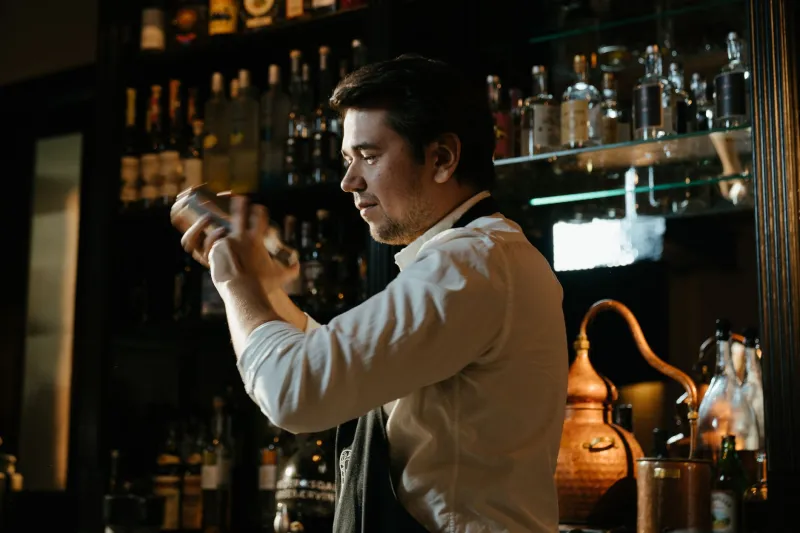
It's a Tuesday in Ancoats and a bar built for forty people is holding ninety. The queue isn't for a DJ, a launch party or a happy hour that ends at seven. It's for two bartenders who, on any other night of the week, are working two hundred miles away.
Welcome to the guest shift: the one-night-only takeover that has quietly become the most dependable sell-out in British nightlife.
So what actually is a guest shift?
The mechanics are simple. A bar hands over its well, its back bar and a chunk of its reputation to a visiting bartender, a pair of them, or an entire crew from another city. For one evening the menu changes, the tempo changes, and a room that would normally be ticking over on a slow night is suddenly the most talked-about bar in town.
It's worth untangling three things that get muddled together. A guest shift is a single night — the visitors turn up, run the bar and get the last train home (or, more realistically, a Travelodge). A residency is a longer arrangement: the same team holding court for a fortnight, a month or a whole season, often with a stripped-back list they'd never get away with at home. And a collaboration menu sits somewhere in between, two bars blending their drinks for a few weeks.
All three are on the rise. The one-night stand is the one people are queuing for.
Why the calendar has filled up
Part of it is money. A guest shift is cheap marketing with a hard deadline attached. Announce the date, let the announcement do the work, and the room fills without anyone printing a flyer.
Part of it is scarcity. A regular Saturday shift happens every Saturday. A guest night happens once, and if you miss it, it's gone. Bars have worked out that "one night only" shifts more bookings than "every night, always" — and drinkers, who already plan gigs and restaurant tables weeks ahead, have simply filed the guest shift into the same mental system.
Then there's the trade itself. Shaking the same twenty drinks for a year is repetitive work, and a takeover gives a team a chance to cook up something they'd never get signed off at their own bar. It's also become a recruitment tool: bars use guest nights to show off their people, and staff use them to build a name that travels. In a hospitality workforce that is still churning hard, that matters more than it sounds.
And there's the practical upside nobody mentions in the Instagram caption. Mondays and Tuesdays are brutal. A guest shift turns the worst night of the week into a date in the diary — and brings in an audience that would otherwise be at home.
Where it's happening
London is still the engine. The Soho cocktail rooms, the Shoreditch and Dalston bars, the Peckham spots with a forty-cover floor and a list that punches well above it — all of them run takeovers almost weekly, and the good ones go in days.
But the interesting shift in 2026 is the direction of travel. Manchester, particularly around Ancoats and the Northern Quarter, now exports as much talent as it imports, with crews regularly taking over London rooms for a night. Glasgow and Edinburgh have a tight, genuinely sociable scene where everyone knows everyone and the visiting list reads like a rota. Leeds, Bristol, Birmingham, Liverpool and Belfast all have venues doing this properly, often at neighbourhood-bar scale rather than big-name scale.
That last point is the one to hold on to. The best guest shift in the country this month is probably not in a bar with a two-hour wait. It's more likely to be in a thirty-cover room above a shop, where the visiting bartender is doing four drinks and a lot of talking.
How to spot a good one before the group chat does
A few hard-won rules:
- Follow the bars, not just the names. The reliable signal is a venue with a good resident team and a habit of hosting. If a bar you like has run three great takeovers, its fourth will probably be great too.
- Get on the mailing list. Guest nights sell out on email and Instagram Stories long before they reach the listings sites. One sign-up beats ten scrolls.
- Read the listing properly. Is it a full menu takeover or three drinks and a DJ? Ticketed or walk-in? Deposit or no deposit? "Guest shift" covers a lot of ground, and some of it is a drinks-industry reunion with a playlist.
- Check the night of the week. The tastiest shifts often land on a Monday or Tuesday, precisely because the room is free. Quieter night, hungrier crowd, better conversation.
- Eat first. Bars doing a takeover usually run a shorter food offer or none at all. Turning up at eight on an empty stomach is how good nights go wrong.
- Ask about the second sitting. Many venues release late slots a week out when deposits lapse. That's your in.
- Follow the visiting team too. The people doing the pouring often announce their own dates first, and their regulars are the ones who actually turn up.
The case against the hype
It would be dishonest to pretend the model has no downside. The same faces do the rounds, and a circuit has formed — a kind of touring schedule for cocktail bartenders that risks making the scene feel smaller than it is. There's a whiff of scene tax about some of the pricing, and the odd takeover that is really a press event with a shaker in the background.
There's also a fair question about what it does to the resident team, who spend the night making drinks they didn't design in a room that's suddenly full of strangers.
The best guest shifts answer that by making the hosts part of the night rather than spectators — introductions, shared menus, a bit of back-and-forth across the bar. The worst treat the venue as a stage.
Still, the direction is clear. A bar is a room, but a night out is an event, and British drinkers have got very good at spotting the difference. The guest shift sells because it makes an ordinary Tuesday feel like the only Tuesday that matters. That's a hard trick to pull off, and right now half the country's better bars are trying.