The Invisible Rope: Cracking the Code of the British Bar Queue

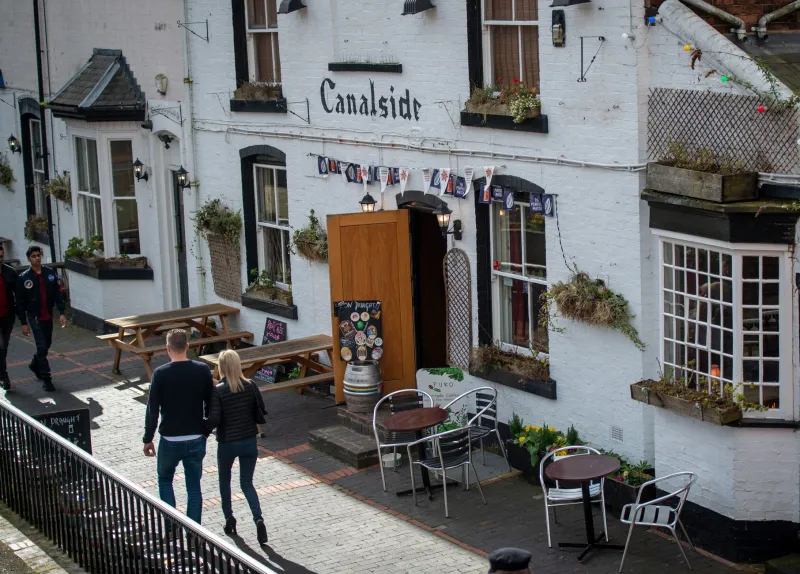
Photo by Photo by Caroline Roose on Unsplash on Unsplash
You push through the door, clock the crowd at the counter and feel it instantly: a low-level social exam you did not revise for. There is no stanchion, no clipboard, no laminated sign saying Please Wait to Be Seated. Yet everyone in the room seems to be holding a number that only they can see. Welcome to the British bar queue — the invisible rope that keeps the night from turning feral.
First Come, First Served? Not Quite
British bar service is not a queue in the bank-holiday-post-office sense. It is a scan. The bartender is the only person who can see the whole list, and that list is not strictly chronological. It is a mixture of who arrived, who looks ready, who has been patient and — this is the bit nobody likes to admit — who has not been a nuisance.
"I am not counting seconds," says Priya, a bartender at a busy neighbourhood bar in Leeds. "I am reading the room. There is the person who has been standing quietly for five minutes, the person who is leaning over the pumps, the person who has just walked in and is already waving a twenty. I know exactly who I am serving next, and it is almost never the waver."
The invisible rope is real, but it is made of eye contact and posture rather than rope. You join it by standing where the bar staff expect to find you, squaring up to the counter with a bit of space around you, and looking like someone who has a plan. You leave it by drifting into the service well, shouting an order over someone else's shoulder or treating the bar like a taxi rank at 2am.
The Geography of Standing
Where you plant your feet matters more than you think. The sweet spot is a clear stretch of counter, ideally not directly in front of the till, the coffee machine or the spot where the bartender needs to reach for the gin. Leave a shoulder's width between you and the person next to you. In a packed room this is a luxury, but even a few centimetres of breathing space reads as respect.
Avoid the lean. You know the one: forearm on the bar, torso angled over the pumps, face hovering in the service area. It does not make you look keen. It makes you look like you are trying to order a pint of the bartender's soul.
"The best customers stand still and look available," says Marcus, who runs a cocktail bar in Bristol. "They do not follow me along the bar. They do not tap the counter. They just make eye contact at the right moment and then wait. It is weirdly calming."
The Round Is a Contract
The moment you are asked what you want, the invisible queue holds its breath. This is where nights are won and lost. Know your order. Know your friends' orders. If someone has asked for a drink with six ingredients and a egg-white foam, either order it earlier in the evening or accept that you are now part of the problem.
A good rule: order the whole round in one go, from left to right, starting with the pints and finishing with the complicated stuff. Do not order one drink, wait for it, then remember your mate wants a lager. That is not a round. That is a hostage situation.
Have your payment ready. The card is in your hand, not in a bag, not in a pocket, not in a wallet that is somehow still in your coat. The British bar queue has no time for the person who treats the card machine like a puzzle box.
Regional Quirks and Local Dialects
The invisible rope is a national institution, but it is spoken with different accents. In Glasgow, the queue is more of a conversation. You will be acknowledged, probably teased, and served with a speed that suggests the bartender has already decided you are sound. In Manchester, there is usually banter involved; do not take it personally, and do not hold up the line trying to win it.
London is a different sport. The queue can be silent, territorial and almost invisible to the naked eye. Regulars have their spots. Bar staff have their perceived order. The only way to learn is to watch and not to push. In smaller towns and village pubs, the queue often dissolves into a kind of communal murmur, where the person who has been waiting longest is generally known by everyone except you.
And then there is the Wetherspoons app, which is not a queue at all but a separate peace treaty. Ordering from the table is fine. Ordering at the bar while a dozen people are doing the same is a choice you may live to regret.
When the Bartender Nods
The nod is the receipt. When a bartender catches your eye and gives you the smallest upward movement of the chin, you are in the system. You do not need to nod back with enthusiasm. A brief smile and a step forward is enough. Do not take the nod as an invitation to start reciting your order from three metres away.
The nod also works in reverse. If you have been waiting and a bartender looks straight past you to serve someone who arrived later, do not panic. There is usually a reason — a tab, a table order, a regular who has been waiting longer than you realised. The invisible rope is not always visible from your end.
The Golden Rules, Practically Speaking
- Catch the eye, do not click. A raised hand is fine. A whistle is not.
- Stand square, leave space. Do not colonise the service well.
- Have the order ready. Including the friend who wants something off-menu.
- Order once. The whole round, in one go, no drip-feeding.
- Step aside. Once ordered, move down the bar. Do not block the spot.
- Tip if you can. But do not make a performance of it.
- Do not order a round of espresso martinis at 11.55pm. This is not a rule of the queue. It is a rule of life.
The British bar queue is not written down anywhere, which is exactly why it works. It is a small, nightly act of collective good manners, held together by eye contact, patience and the shared understanding that nobody wants to be the person who ruins it. Next time you walk in and feel that invisible rope pull taut, do not fight it. Find your spot, catch the nod and order like you mean it.