Outside In: The Heat-Lamped Huddle That Makes a British Night Out

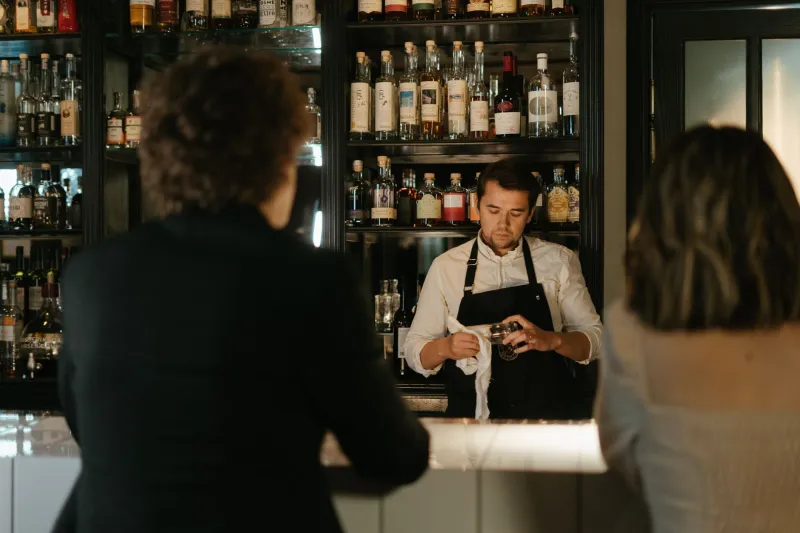
Photo: covered outdoor pub terrace UK at night with patio heaters and blankets, via magnifissance.com
There's a moment on every good night out when the room you booked stops being the room you want. The music has crept up a notch, the bar is four deep, and the only seats left are the ones under the speaker. So you do what everyone does: you pick up your glass, push the door, and step into the other room. The one with no ceiling.
The covered smoking area — the heated patio, the lean-to, the huddled pavement corner — is where British nights out now go to actually talk. It is the least designed, least marketed, most sociable square footage in the building. And after two decades of tinkering with lighting, playlists and small plates, it might be the only part of the modern bar that still works exactly as intended.
The 2007 Inheritance
Let's be clear about history: when the indoor smoking ban arrived in England in 2007 (Scotland got there in 2006, Wales and Northern Ireland in 2007 too), nobody expected the pub garden to become an architectural project. The outdoor bit was where you went to smoke. Full stop.
What happened next was subtler. As smoking retreated, the space it left behind didn't empty out — it got repurposed by people who wanted the same thing smokers had always wanted: a corner where you could stand, drink, and talk without shouting. Twenty years on, the covered corner is a social institution that just happens to still have an ashtray in it.
Shelter Is the Whole Trick
"If the wind hits you on the left shoulder, the room is dead," says Ruth Ellery, who runs a back-street bar in Leeds with a 22-seat terrace. "Everything we've built out there is really just a windbreak with ambitions."
The best outdoor corners are engineering jobs disguised as afterthoughts. A solid wall on the prevailing-weather side. A roof that stops short of the building so the smoke and the noise have somewhere to go. Heaters mounted high and angled down, not blasting at knee height. A blanket basket that gets refilled more often than the crisp jar. One Manchester venue we know has a stack of hot water bottles behind the door in December, which is either the most northern thing ever or a small act of genius.
The worst ones are the token efforts: one sad heater, three wobbling benches, a puddle where the drain should be. Regulars can smell the difference from the street.
The Etiquette of Joining
Here's what makes the outdoor corner unusual: there is no host, no seating plan and no table service, yet everyone knows the rules.
You ask before you share a bench. You get a nod, not a conversation, and then you sit in silence for 90 seconds until someone cracks. You don't hog the warm spot — the one directly under the heater belongs to whoever got there first, and they know it. If you've come out with a round, you carry it; if you've come out empty-handed, you offer to go back in. The lighter, if offered, comes back. The door gets held, or at least wedged.
And then, somewhere around the second drink, the strange intimacy kicks in. Two strangers discover a shared hometown. Someone's phone comes out to settle an argument about a 2003 chart position. A man you have never met tells you, without preamble, about his divorce, and then apologises for telling you about his divorce. This is normal. This is the 11pm confessional, and it only happens outside.
Where the Hierarchy Goes to Die
Inside, a bar is a series of small performances. There are mirrors. There is a playlist to talk over, which means leaning in, which means a certain amount of theatre. There's the queue at the bar, where status is measured in who gets served.
Outside, all of that falls away. The lighting is flat, the acoustics are open-air and nobody can see their own reflection. The managing director and the glass collector end up sharing a heater, because heaters don't care. It is, quietly, the most democratic square metre in the building — and the only one where a stranger is genuinely expected to speak to you.
The Politics of the Heat Lamp
There is one small drama played out on every British terrace, every night, from October to April: is the heater actually on?
Patio heaters are expensive to run and easy to forget. That's why you'll see the same ritual everywhere — a hopeful hand waved underneath the element, a squint at the little dial, a search for the timer switch that's usually behind a plant pot. Some pubs have gone button-operated and freed themselves. Others have quietly retired the gas heaters altogether and leaned into blankets, hot toddies and the old-fashioned British solution to cold: a bigger coat.
"We worked out it was costing us about the price of a pint an hour to keep four heaters going," says a co-owner of a Bristol bar with a courtyard. "Now we do two heaters, a covered end and a pile of wool. People stay longer and drink more slowly, which is fine by us."
A Short Field Guide
- Dress for it. The outdoor corner is not a place to be brave in a shirt. A layer you can carry is the difference between 20 minutes and two hours.
- Don't stand in the doorway. Half-in, half-out blocks the warm air, the conversation and the path. Commit.
- Offer the round before you need it. The person who volunteers to go back inside is the person the group remembers.
- Respect the heater seat. If you've got it, enjoy it, but don't set up camp with a laptop bag and a full plate.
- Give the silence a minute. The best conversations out there start about 90 seconds after someone sits down.
The bar inside is where the night is booked. The covered corner outside is where it actually happens — the honest, unglamorous, slightly chilly heart of the whole thing. Bring a coat. Bring a lighter you don't mind losing. And when someone asks if they can share the bench, say yes.